
In today’s cloud-first world, where cloud spending frequently outpaces cloud budgets and 30% of cloud resources are underutilized (Flexera 2023), Financial Operations (FinOps) teams face mounting pressure to balance innovation with fiscal responsibility. Enter Cloud Management Platforms (CMPs): the orchestration engines turning cloud chaos into actionable insights..
Cloud Management
Finops
Cloud Costs
Cost Optimization
Automation
Cloud Computing
Governance
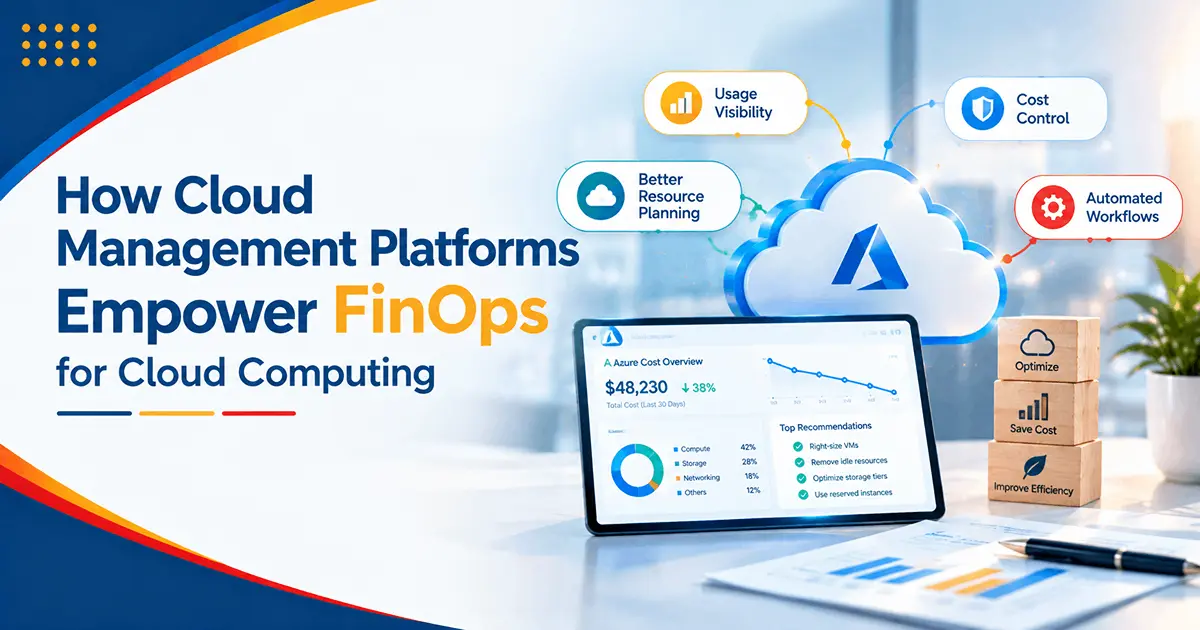
How Cloud Management Platforms Empower FinOps for Cloud Computing
The FinOps Revolution: Why CMPs Matter
As organizations scale their cloud adoption, the traditional approach to cost management becomes obsolete. Manual tracking, spreadsheet-based reporting, and reactive cost control measures simply can't keep pace with the dynamic nature of cloud consumption. Cloud Management Platforms emerge as the strategic enabler, providing FinOps teams with the sophisticated toolset needed to transform cloud chaos into financial clarity.
01
Cost Visibility and Transparency: The Foundation of Financial Control
The foundation of effective FinOps begins with comprehensive visibility. CMPs revolutionize how organizations understand their cloud spending through a unified, real-time view of cloud environments.
Granular Cost Attribution
Track spending down to individual projects, departments, or even development teams using AI-driven tagging and metadata analysis.
Dynamic Dashboards
Interactive visualizations highlight spending trends, regional cost variations, and service-level expenditures (e.g., AWS S3 vs. Azure Blob Storage).
Shadow IT Detection
Identify unauthorized "zombie" resources draining budgets, from forgotten test environments to overprovisioned databases.
02
Proactive Financial Control: Budget Management and Forecasting
Moving beyond reactive cost management, CMPs empower FinOps teams with predictive capabilities:
Intelligent Budget Guardrails
Set dynamic budgets that adapt to business cycles and seasonal variations. Automated alerts notify stakeholders before thresholds are breached, not after the damage is done.
AI-Powered Forecasting
Machine learning algorithms analyze historical patterns, current trends, and planned initiatives to provide accurate spend projections. This foresight enables better financial planning and prevents budget surprises.
Anomaly Detection
Advanced analytics identify unusual spending patterns that might indicate misconfigurations, security breaches, or unintended resource provisioning, protecting organizations from costly mistakes.
03
Maximizing Value: Optimization and Efficiency
CMPs transform cost optimization from a periodic exercise into a continuous practice:
Resource Rightsizing Intelligence
Sophisticated algorithms analyze actual resource utilization against provisioned capacity, identifying opportunities to downsize overprovisioned resources or upgrade constrained ones for better performance-to-cost ratios.
Automated Waste Elimination
Identify and remediate common sources of waste such as:
- Orphaned storage volumes and snapshots
- Idle compute instances and databases
- Unattached IP addresses and load balancers
- Over-provisioned bandwidth and network resources
Smart Scheduling
Implement automated start/stop schedules for non-production resources, potentially reducing costs by 65% or more for development and testing environments.
Reserved Instance and Savings Plan Optimization
CMPs analyze usage patterns to recommend the optimal mix of on-demand, reserved, and spot instances, maximizing discount opportunities while maintaining flexibility.
04
Ensuring Compliance: Governance and Policy Enforcement
Effective FinOps requires consistent policy application across the organization:
Policy-as-Code Implementation
Define and enforce financial policies programmatically, ensuring consistent application across all cloud resources and preventing policy drift.
Automated Tagging Enforcement
Implement mandatory tagging schemas that ensure every resource is properly labelled for cost allocation, compliance, and management purposes.
Approval Workflows
Establish automated approval chains for resource provisioning based on cost thresholds, resource types, or departmental hierarchies, preventing unauthorized or excessive spending.
Compliance Reporting
Generate audit-ready reports demonstrating adherence to internal policies and external regulations, simplifying compliance processes.
05
Data-Driven Decisions: Advanced Reporting and Analytics
Transform raw data into strategic insights:
Executive Dashboards
Provide C-suite visibility into cloud ROI, cost trends, and optimization opportunities through intuitive visualizations and KPI tracking.
Detailed Drill-Down Capabilities
Enable stakeholders to investigate costs from high-level summaries down to individual resource charges, facilitating root cause analysis.
Custom Report Builder
Create tailored reports for different audiences – from technical teams needing resource-level details to finance teams requiring departmental summaries.
Benchmarking and Peer Comparison
Compare your cloud efficiency metrics against industry standards and best practices, identifying areas for improvement.
06
Driving Accountability: Chargeback and Showback
Foster a culture of financial responsibility:
Automated Cost Distribution
Accurately allocate shared resource costs based on actual consumption, eliminating manual calculation errors and disputes.
Transparent Showback Reports
Even without formal chargebacks, showback reports create awareness of cloud costs among teams, naturally encouraging more responsible consumption.
Gamification Elements
Some CMPs include leaderboards and efficiency scores, turning cost optimization into a positive competitive dynamic between teams.
07
Seamless Operations: Automation and Integration
Maximize efficiency through intelligent automation:
Native Integrations
Connect with popular tools including:
- Financial systems (SAP, Oracle, QuickBooks)
- ITSM platforms (ServiceNow, Jira)
- DevOps tools (Jenkins, GitLab, Terraform)
- Communication platforms (Slack, Microsoft Teams)
Workflow Automation
Automate routine tasks such as:
- Monthly report generation and distribution
- Cost anomaly investigation and remediation
- Resource tagging and cleanup
- Budget alert escalation
API-First Architecture
Enable custom integrations and extend platform capabilities to meet unique organizational requirements.
08
Collaborative FinOps: Bridging Finance, Engineering, and Leadership
CMPs create a shared language for cloud economics.
Chargeback/Showback
Allocate costs via custom logic (e.g., prorated Kubernetes cluster costs per microservice).
Stakeholder-Specific Reporting
Generate C-suite summaries, engineering deep dives, and auditor-ready compliance logs from a single platform.
Workflow Integration
Sync data with ITSM tools (ServiceNow), finance systems (SAP), and CI/CD pipelines for seamless cross-team alignment.
Shared Goals and Metrics
Align teams around common KPIs and optimization targets, fostering a unified approach to cloud financial management.
The Strategic Impact: Measuring CMP Success
Organizations implementing CMPs typically experience:
20-40%
75%
90%
50%
Looking Ahead: The Future of FinOps with CMPs
As cloud technologies evolve, CMPs continue to advance with:
AI-driven optimization recommendations becoming increasingly sophisticated
Sustainability metrics integration for carbon-conscious cloud management
FinOps automation reducing manual intervention requirements
Predictive analytics enabling proactive cost avoidance
Conclusion: Empowering FinOps Excellence
Cloud Management Platforms represent more than just a tool – they embody a strategic approach to cloud financial management. By providing comprehensive visibility, intelligent automation, and collaborative capabilities, CMPs empower FinOps teams to transform from reactive cost managers to proactive value creators.
In an era where cloud spending can make or break competitive advantage, organizations that leverage CMPs position themselves for sustainable growth, operational excellence, and financial optimization. The question isn't whether to adopt a CMP, but how quickly you can harness its power to drive your FinOps transformation.